
Uncanny Waters
a costume and performance project
by Lu Firth & Ray Malone
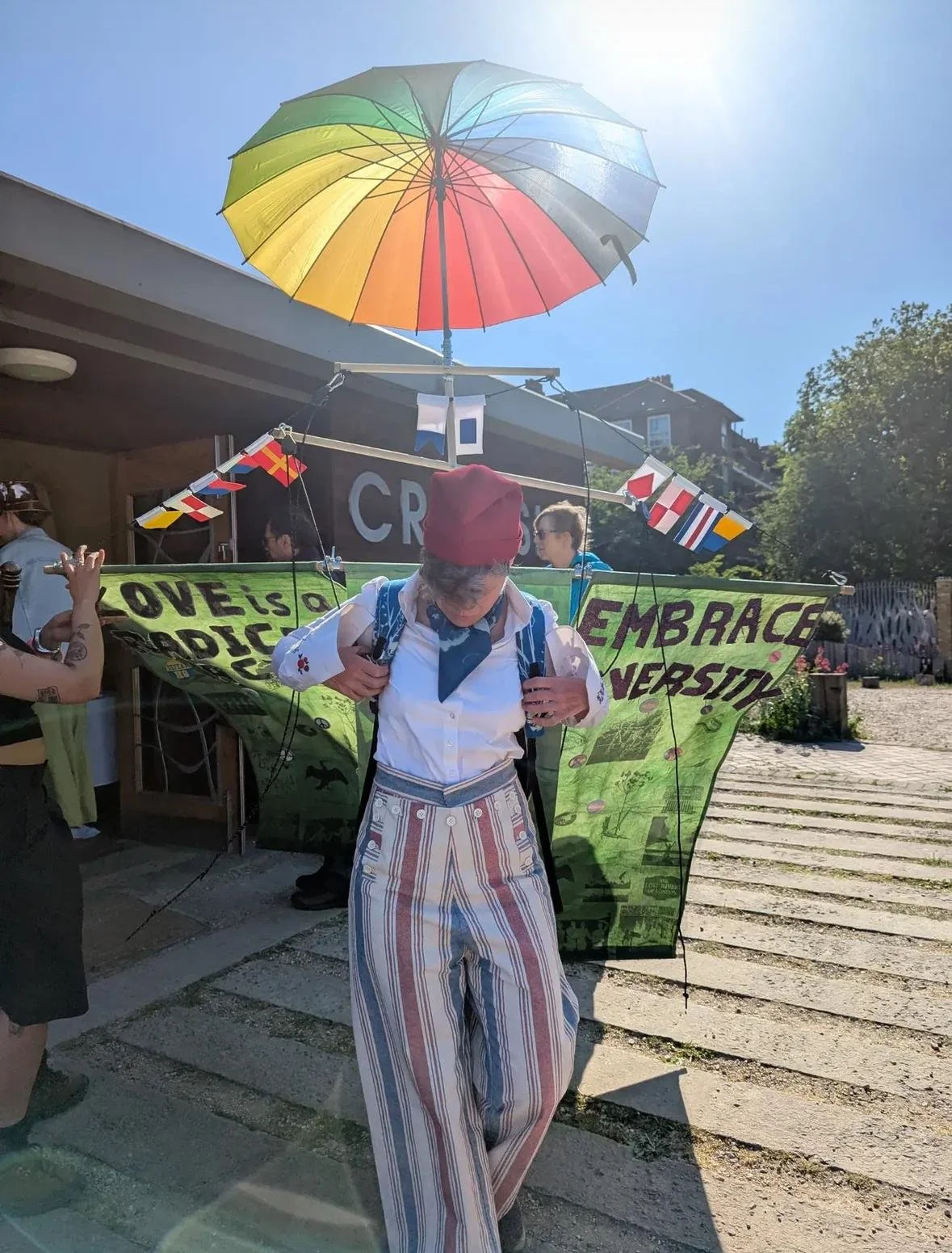
Uncanny Waters is an intergenerational costume and performance project led by collaborative artists Lu Firth & Ray Malone, bringing together 10 uncanny participants aged under 30 and over 50 to explore the intersections of water and queer resistance through costume-making.
Through a series of workshops, our participants explored the symbolism of water as a site of connection and transformation. From mythical figures like the Deptford Necker (a South London river hag) to personal stories of migration and border-crossing, the project created costumes and textiles from the stories that shape our identities and connect us to time and place.
The workshops involved costume design and creation, as well as explorations of queer resistance, the uncanny and historical research. Participants also engaged in activities such as mudlarking and low tide walks, that connected the creative work to London’s waterways.

National Maritime Museum Workshops
From November 2024, Uncanny Waters workshops took place at the National Maritime Museum in Greenwich. Ray Malone led workshops exploring the uncanny, folklore and queer activism. Participants told each other stories of personal and cultural heritage.
Shakleton’s Endurance Expedition
Frank Hurley, 1915. © Scott Polar Research Institute
What does Uncanny Waters mean?
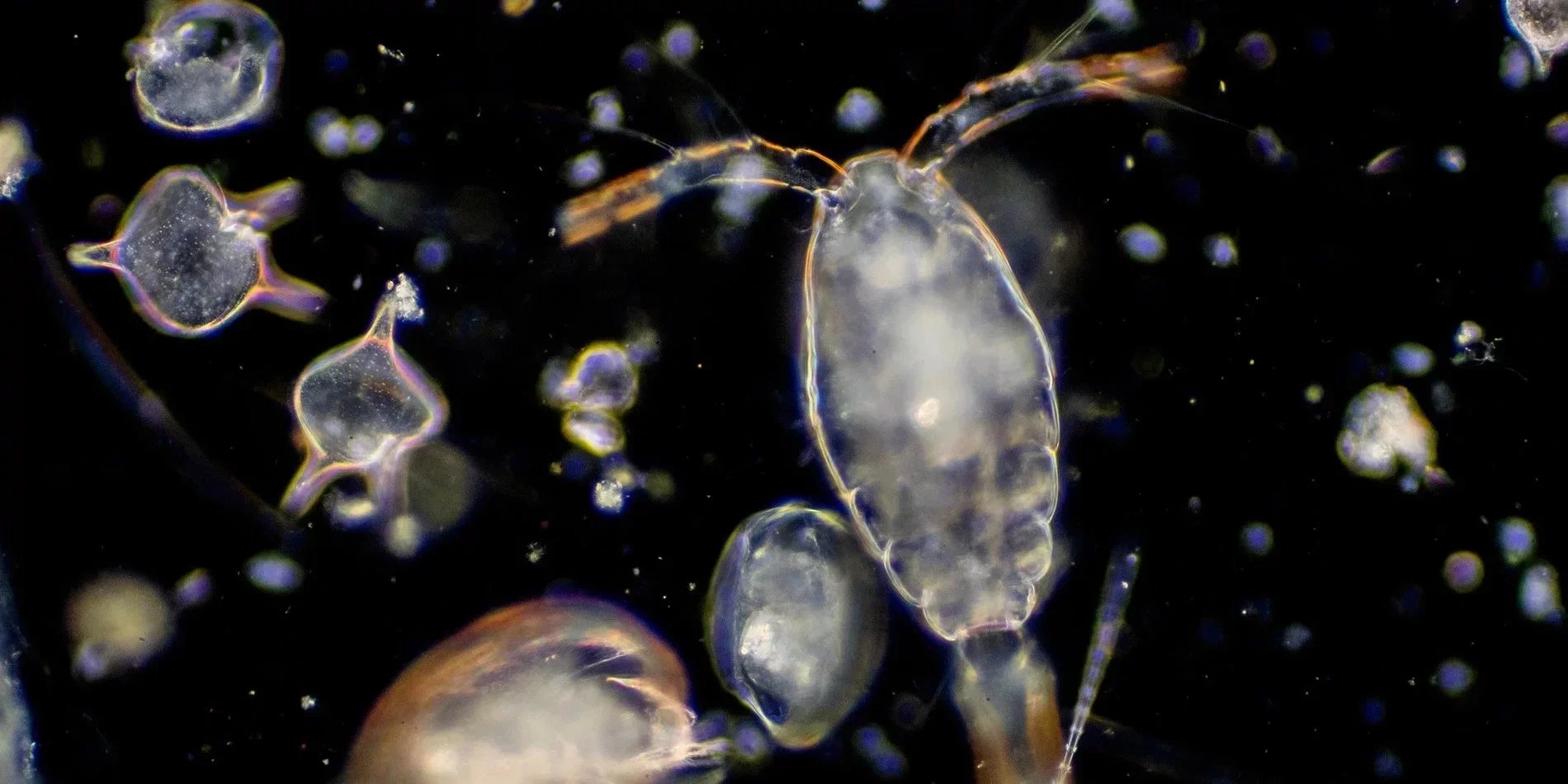
The title of the project was inspired by Caroline Emily Rae’s eco-feminist essay of the same name: Uncanny Waters. The essay considers the territorial understandings of bodies of water and calls for a queer, feminist relationship with watery spaces. Rae argues that both transcorporeality (the interconnectedness of human and environment), and the uncanny dissolve assumptions of the self as distinct and impenetrable. Water is about connection, it insists that we understand ourselves not as isolated beings but as part of a fluid, relational ecology.
Photo: Plankton under the microscope. tonaquatic/ istock
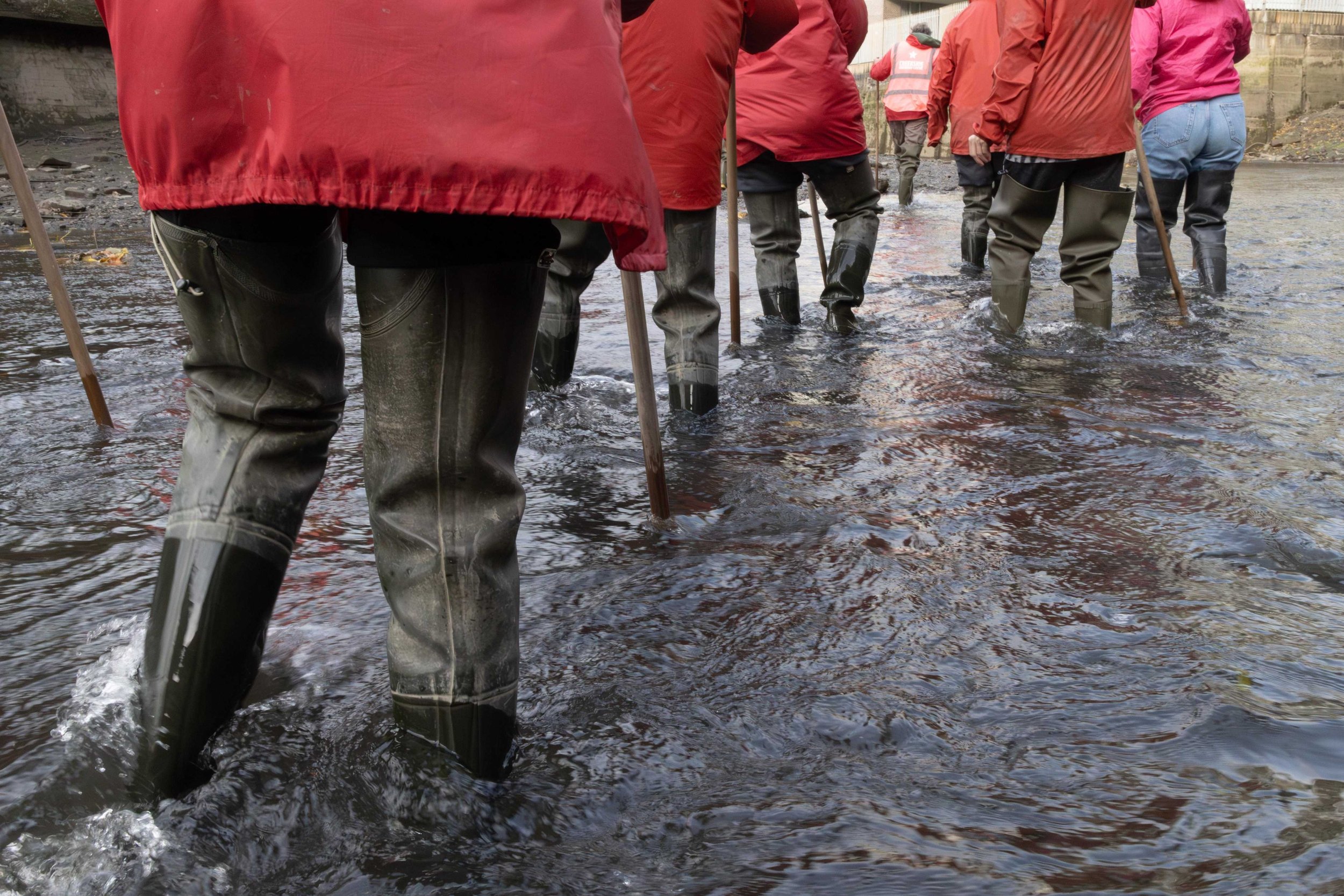
“Everyone looks sexy in waders.”
Medusa Has Been
Deptford Creekside
Exploring Deptford Creek during Storm Bert.
Uncanny Waters trip to Deptford Creekside was a muddy treasure hunt through London’s history, featuring sexy green waders and walking trees. We uncovered Staffordshire Slipware pottery shards, a river bed of old clothes and a discarded can of sardines.

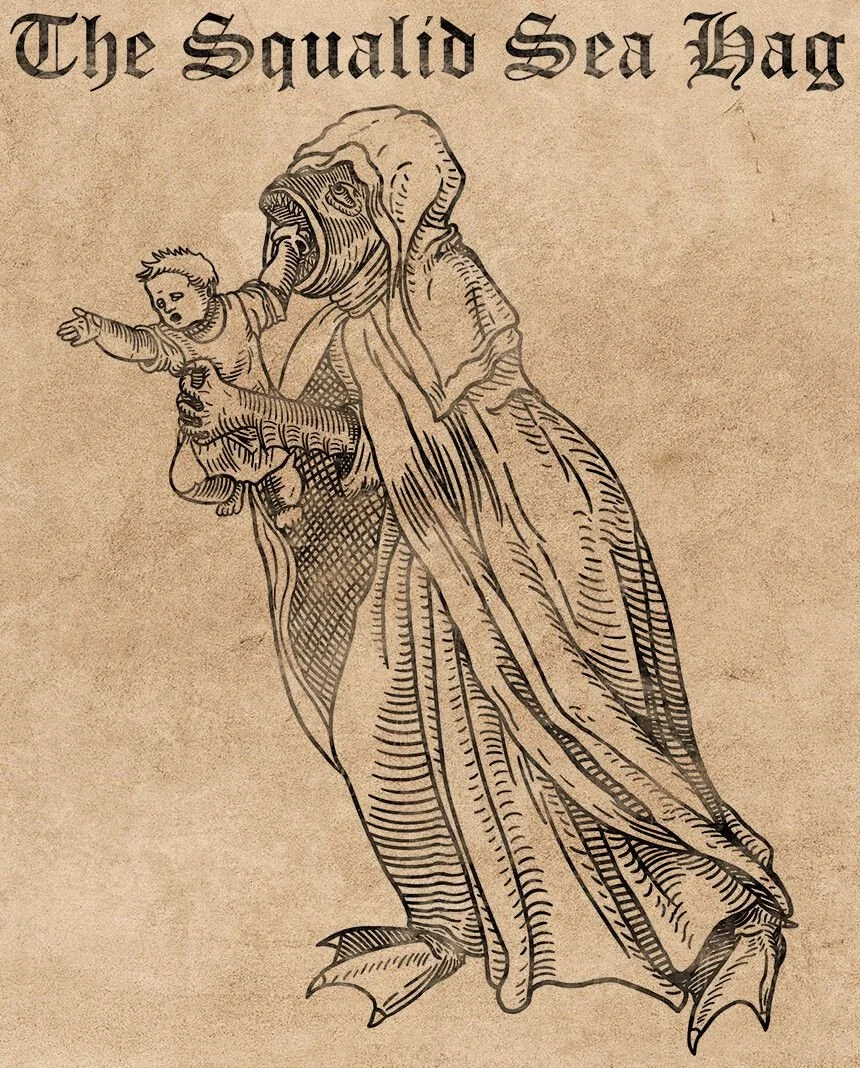
Sea Hag, 1557, Rory 'Zin' Jordan
The project drew on folklore, particularly the myth of the ‘Deptford Necker’ a shapeshifting river hag. Traditionally ‘hags’ are portrayed as wizened old women who live at the margins. In folklore they often embody otherness: older, non-reproductive, gender-nonconforming bodies marked as monstrous. The project reclaimed the hag as a figure of queer resistance and transformation.
Uncanny Waters reframed the monstrous as a site of resilience. The spirits of the hag, Medusa, and the Sheela na Gig shaped a process that prioritised slowness and responded to disability and aging. Through these archetypes we explored the intersections of folklore, queer and feminist identities, radical politics and social and environmental justice.

Somerset House Workshops
Running from January to April 2025, Uncanny Waters workshops took place in Somerset House. Led by artist Lu Firth, these hands-on sessions introduced participants to the basics of sewing and encouraged experimental approaches to costume-making. The workshops provided a welcoming space to play and create as a community.
Fanny Bleach & Teabag
Photo: Ray Malone
THE EXHIBITION
Deptford Creekside Discovery Centre.
In May 2025, the project culminated with an exhibition which brought the project together in a multi-room installation at Deptford Creekside Discovery Centre. All 10 of our Uncanny participants created their own costumes and textile pieces, and many of them also produced written work and performance inspired by their experience and process.
Audiences were welcomed into the site by musical duo Kith, whose strange soundscape opened the experience. At the entrance, Honor Bathurst’s ‘Toolbox’, a sculptural work screen-printed with images of mudlarked metal reminiscent of maritime navigation tools, stood on display.
Several artists modelled their own costumes, while others appeared on performers delivering monologues throughout the building. Each costume, developed during the workshops, carried its own story. In the waders room, George Cox’s piece gloves crafted from mudlarked glass and soldered together was also on view.
The exhibition included a live durational performance by E.M. Parry, Biology is not destiny, in which they stitched into silicone skin as a large silicone belly slowly filled with Creek water.
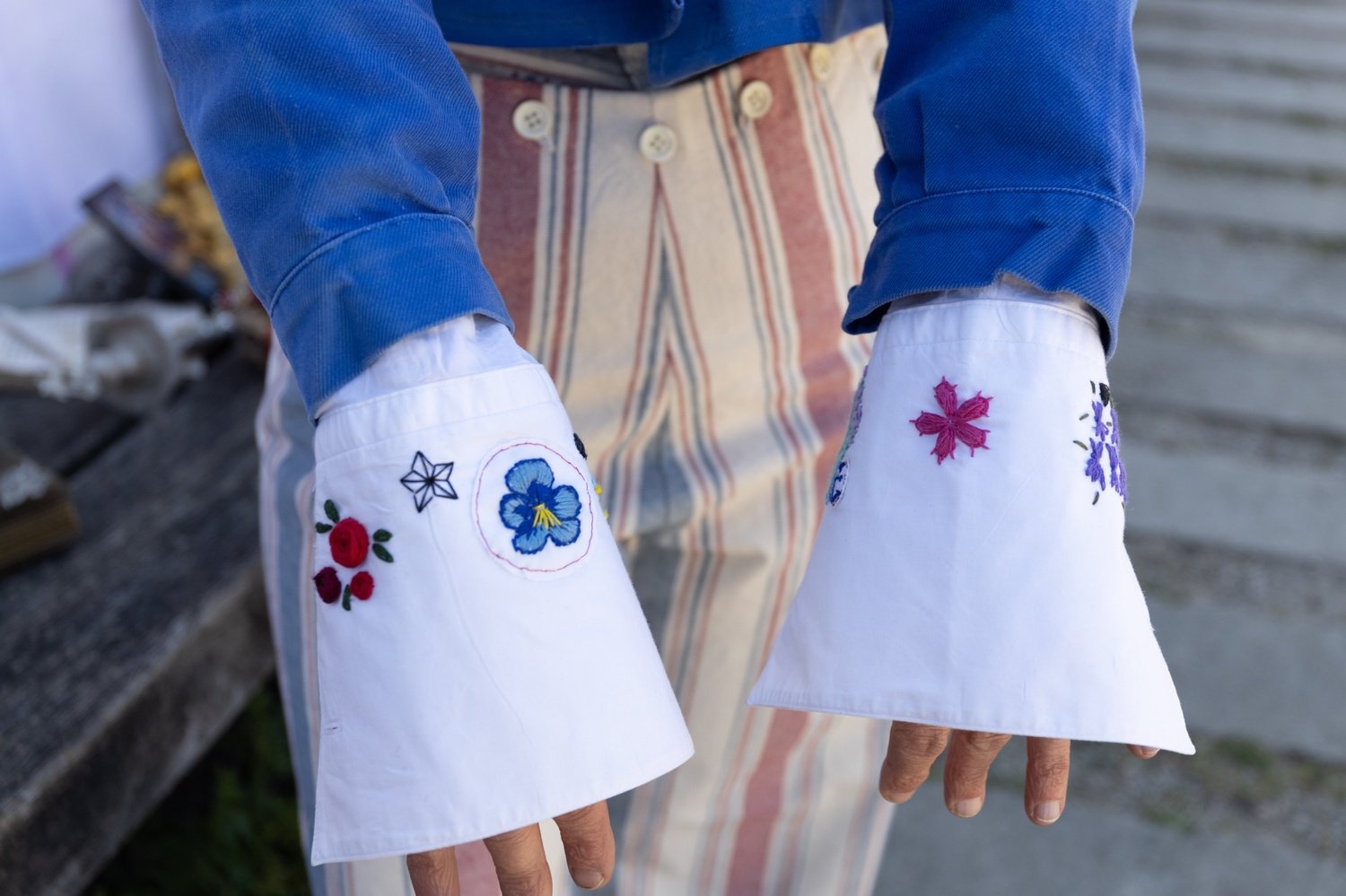
Photo: Ray Malone
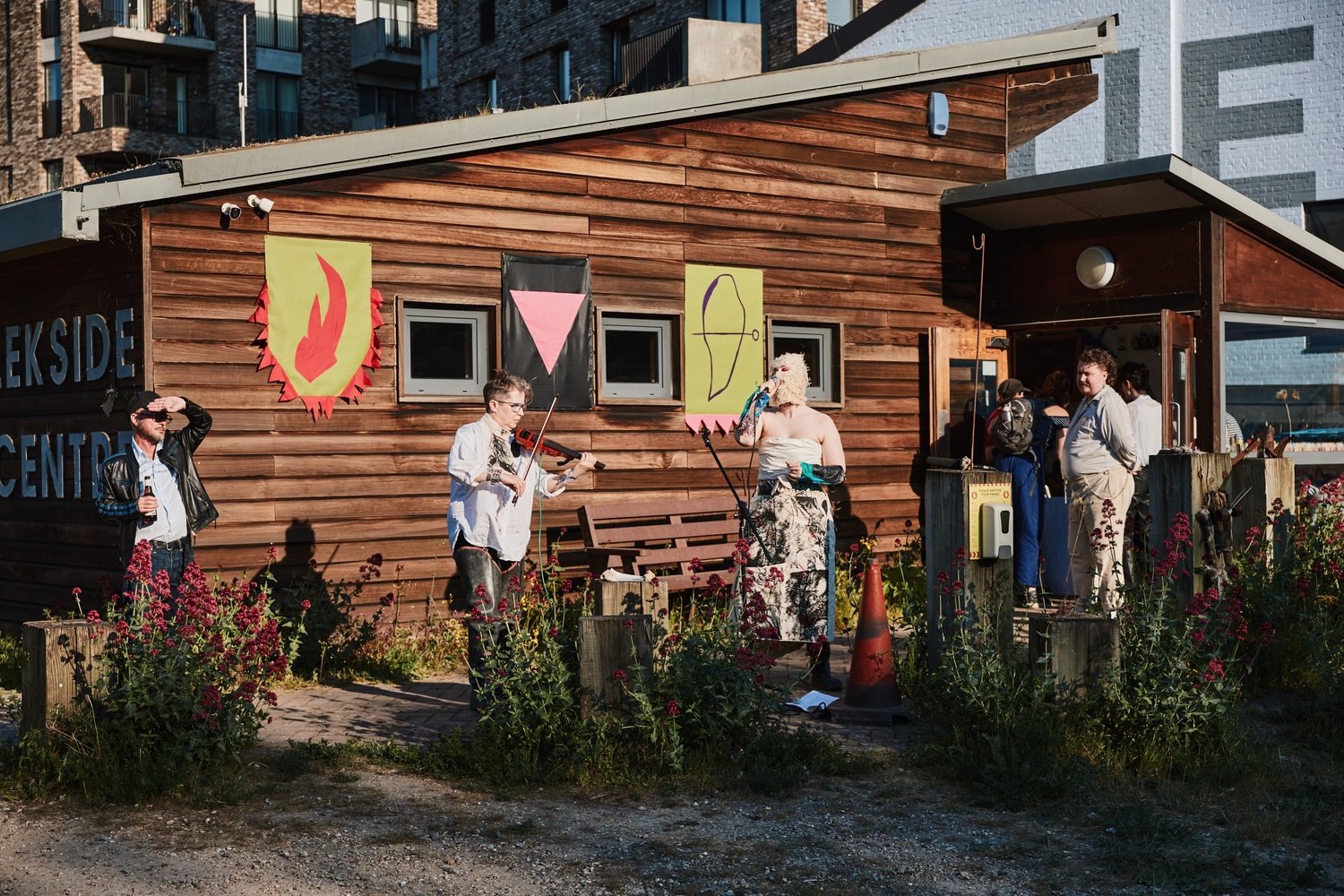
Photo: Henri T
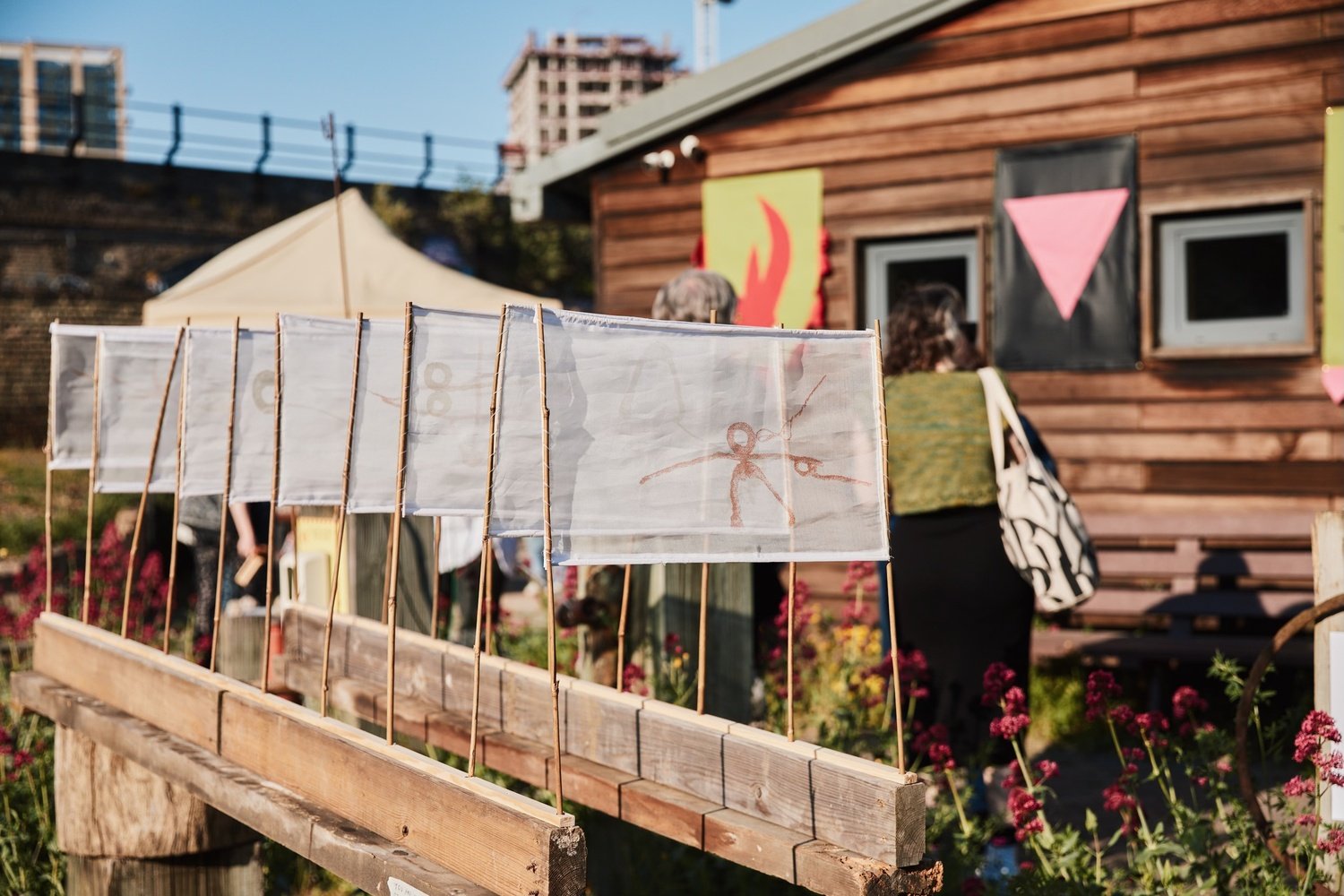
A Toolbox by Honor Bathurst Photo: Henri T
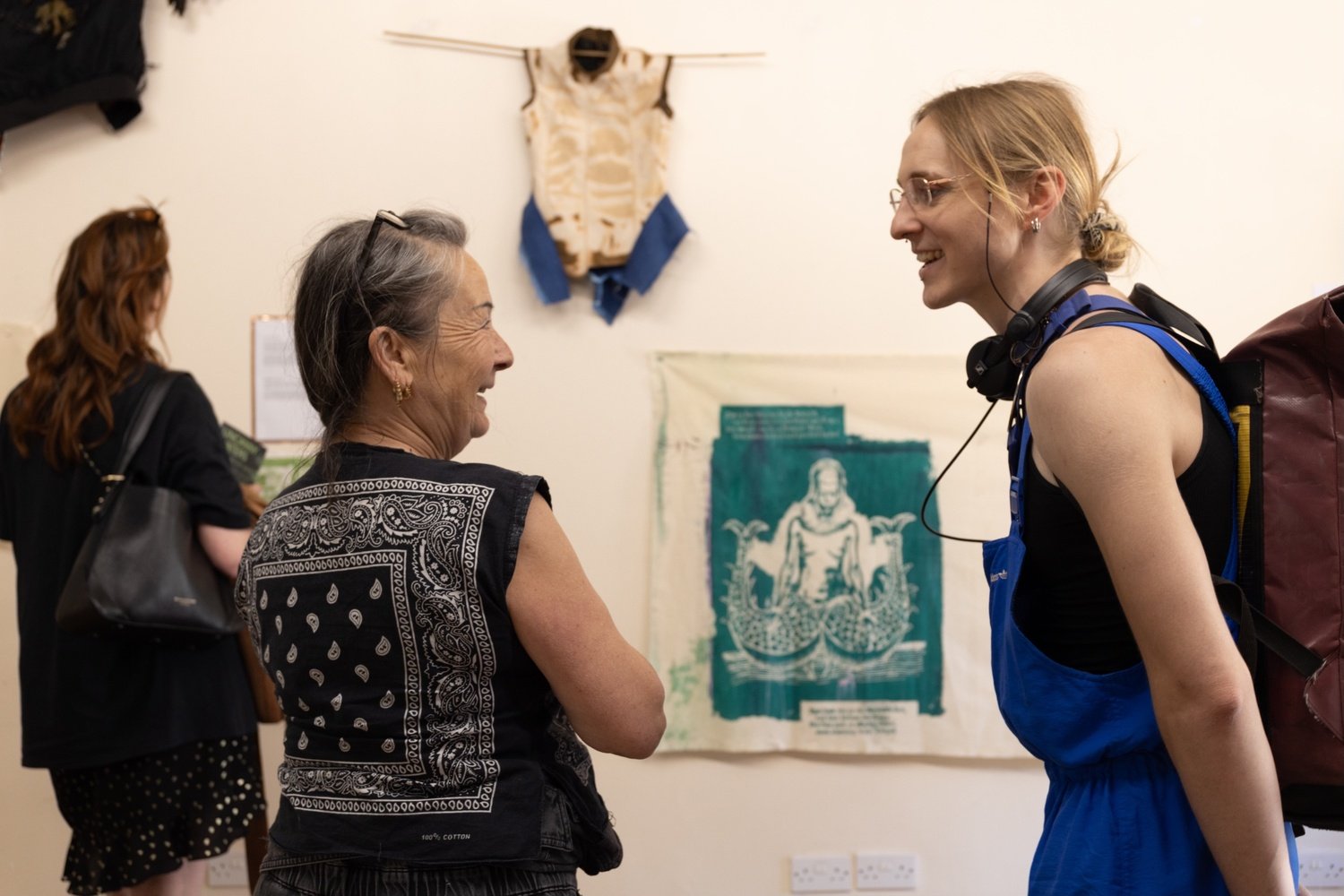
Photo: Ray Malone

Jeanne Baret Photo: Ray Malone

Magic Fish Photo: Ray Malone
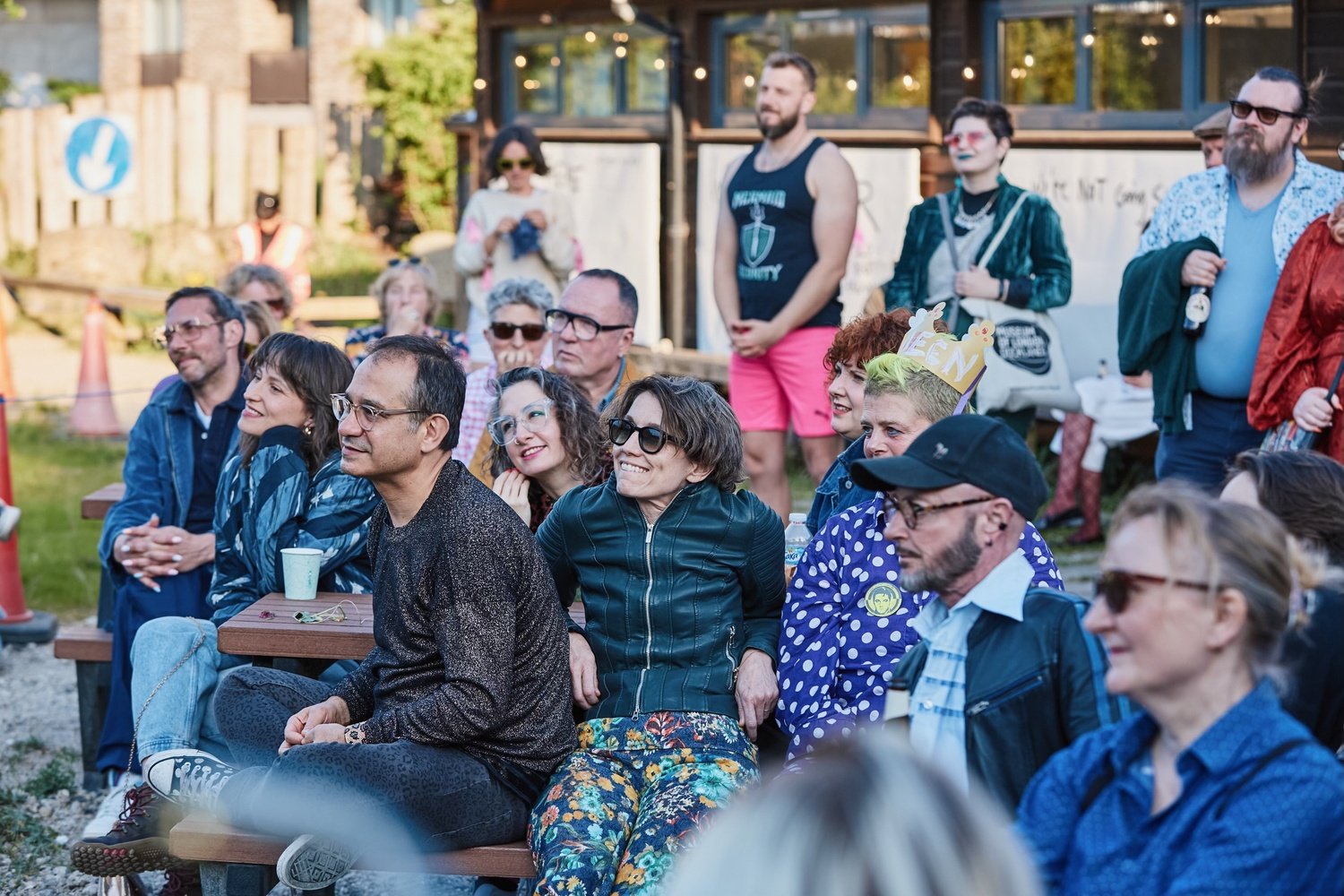
Photo: Henri T

Arkem Mark Walton, Lu Firth & Medusa Has Been Photo: Ray Malone
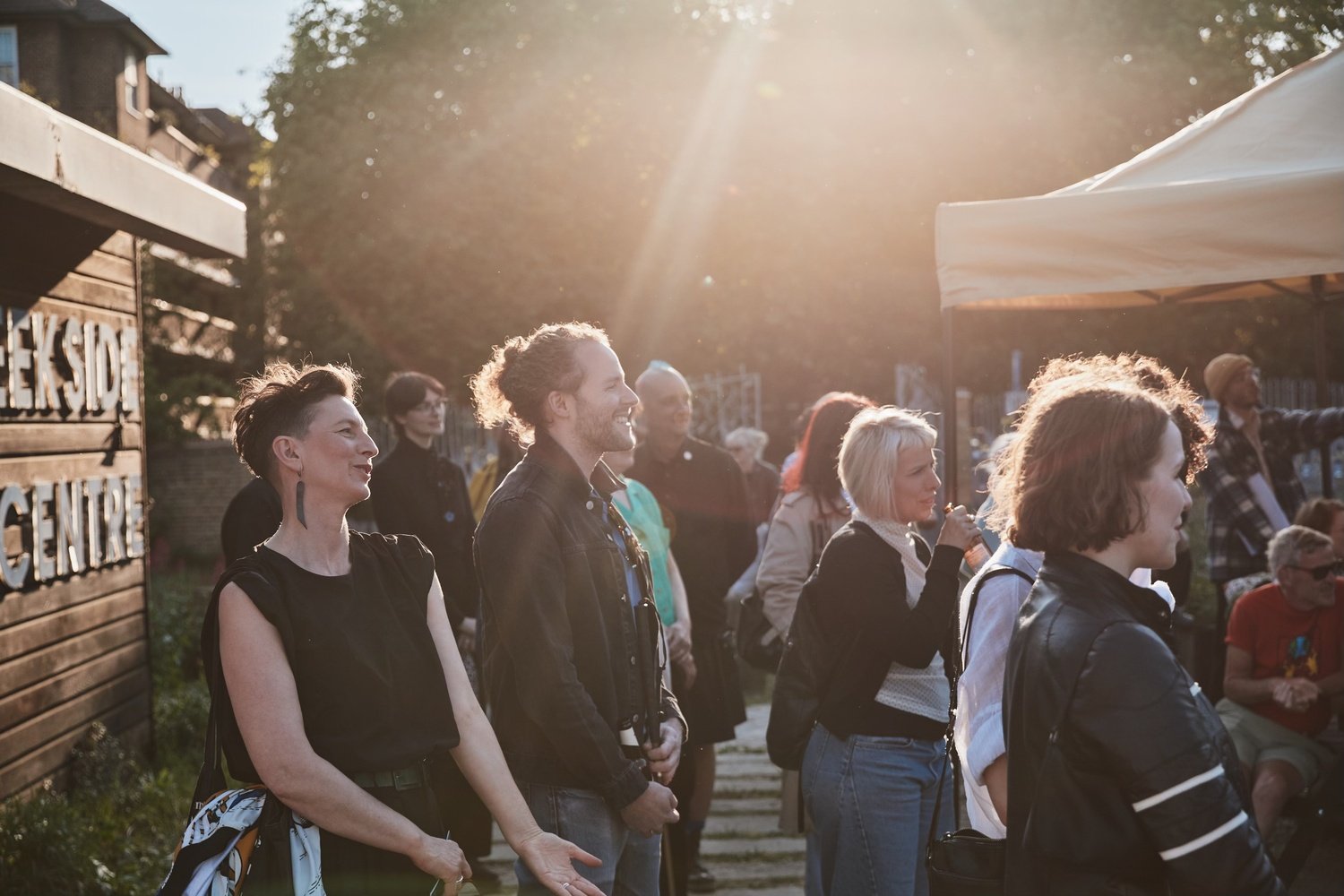
Photo: Henri T
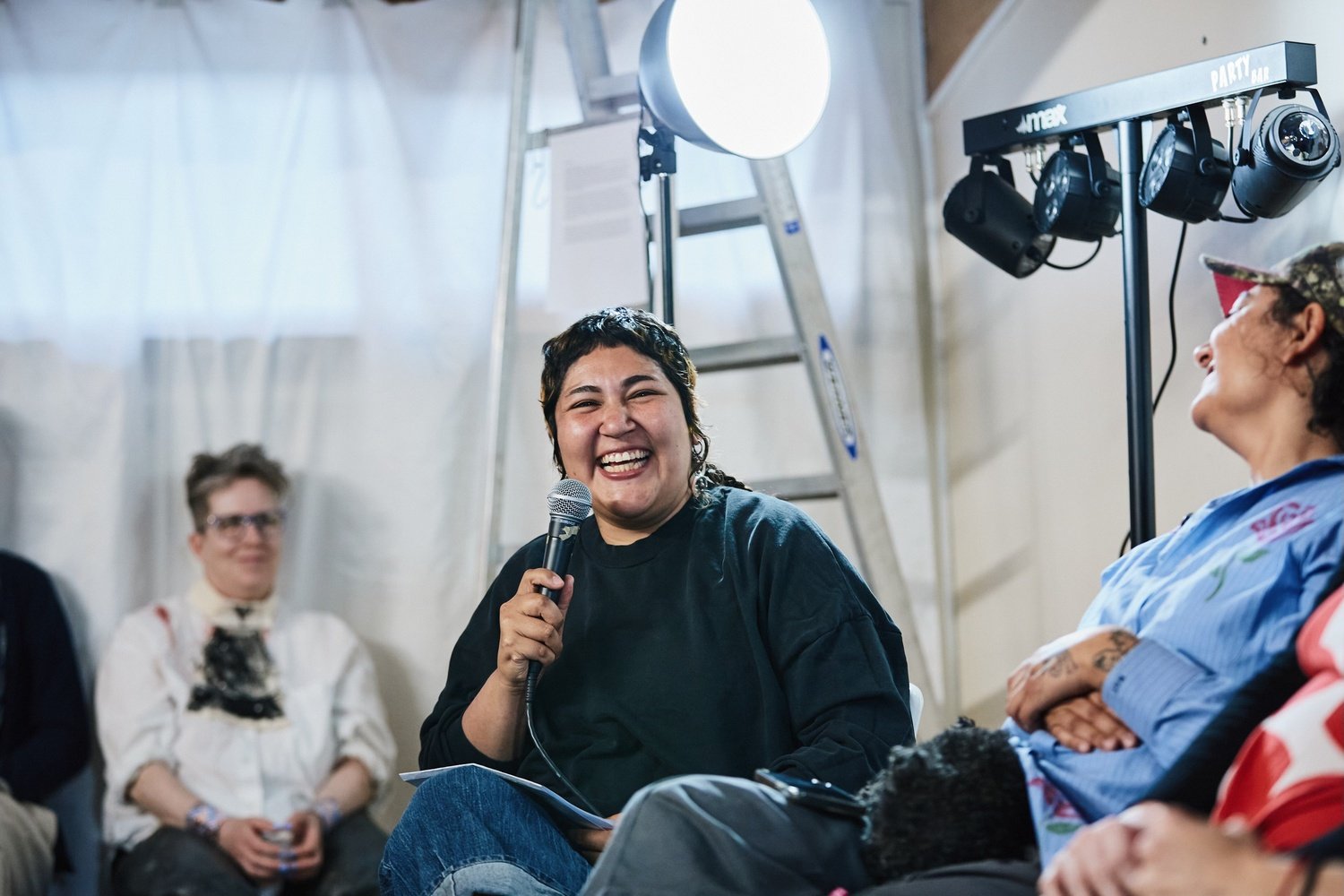
Gabriela Salas. Photo: Henri T
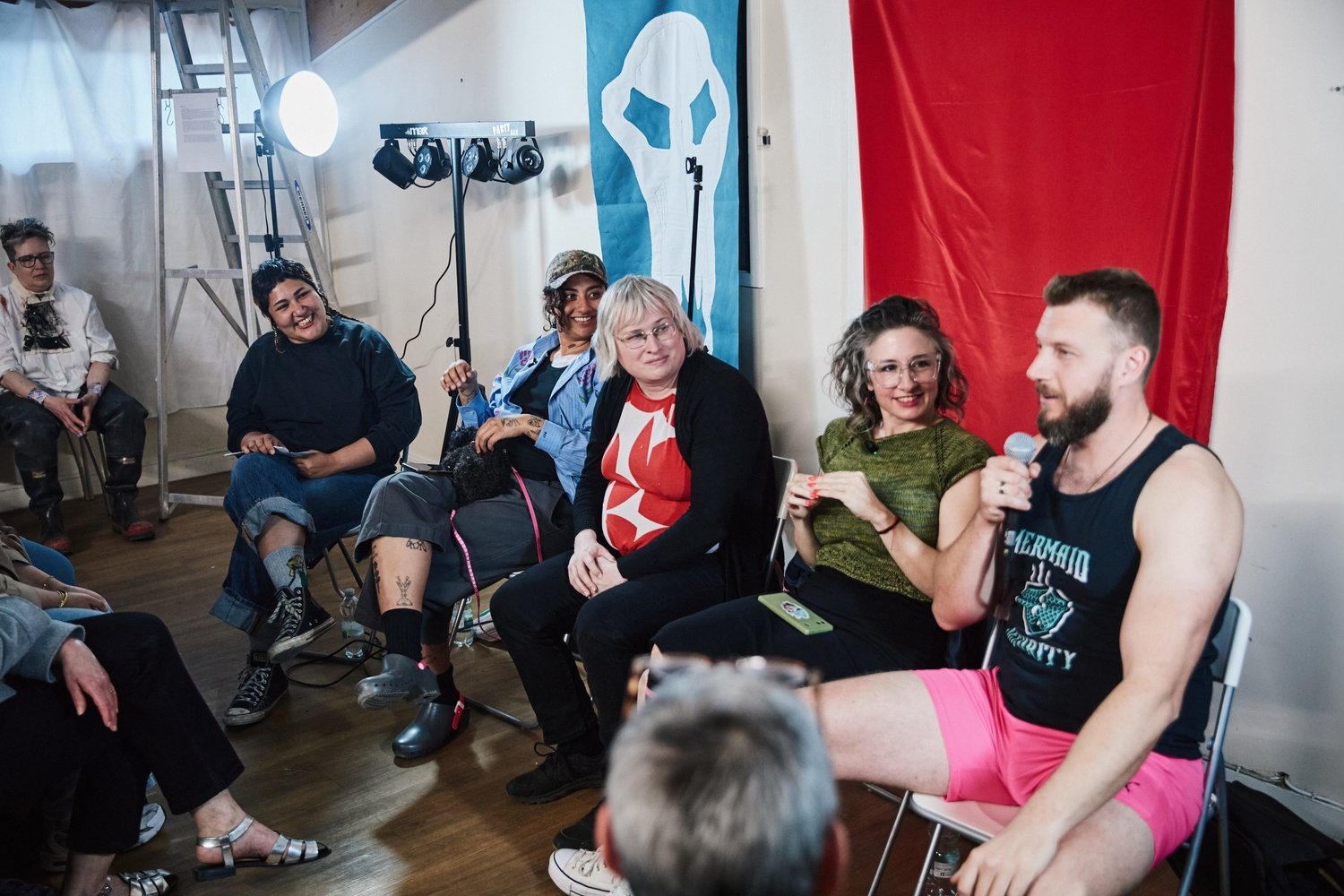
Gabriela Salas, Aisha Mirza, Juliet Jacques, Sarah Jaffe, Sacha Coward. Photo: Henri T
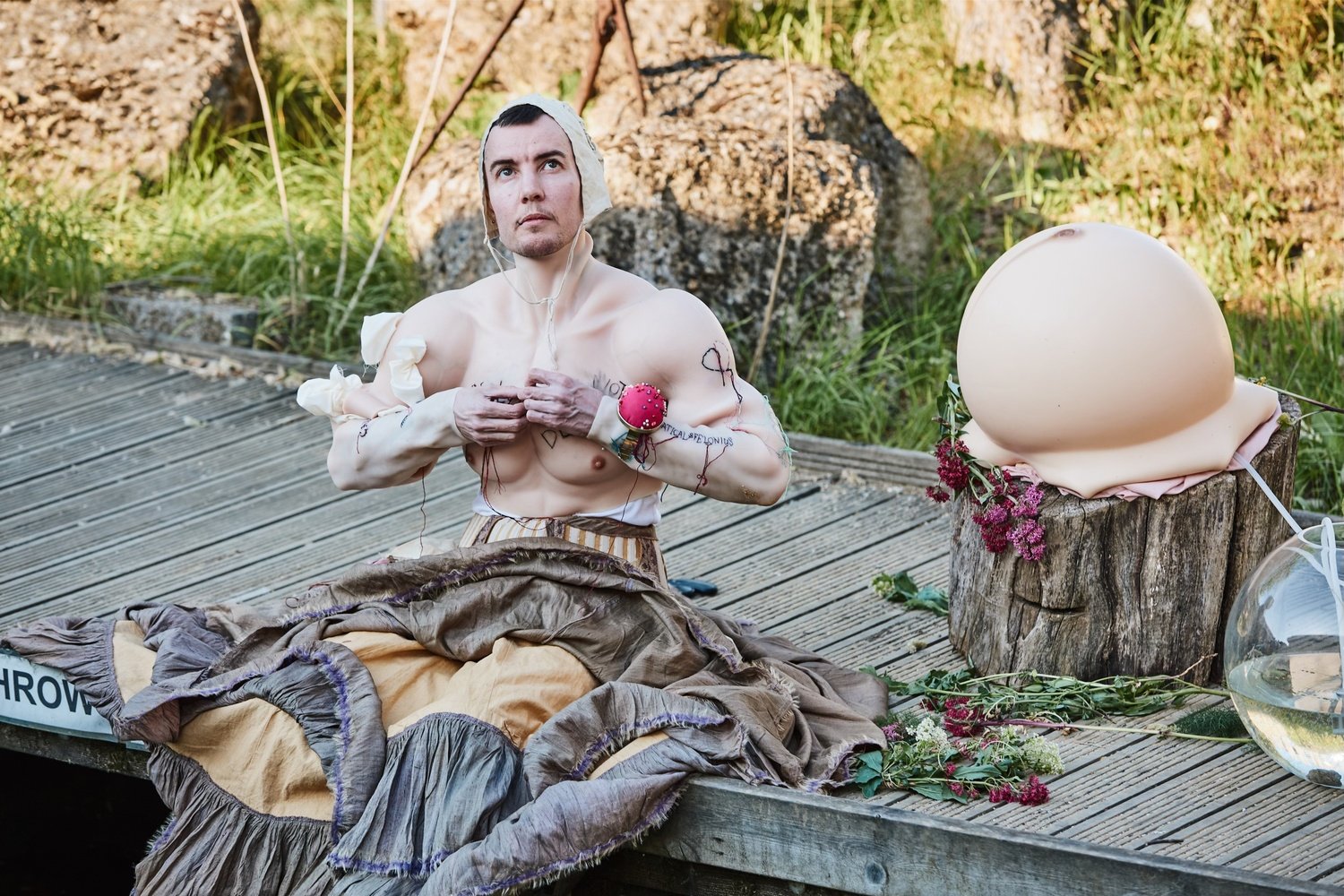
Belly Full by E.M Parry. Photo: Henri T
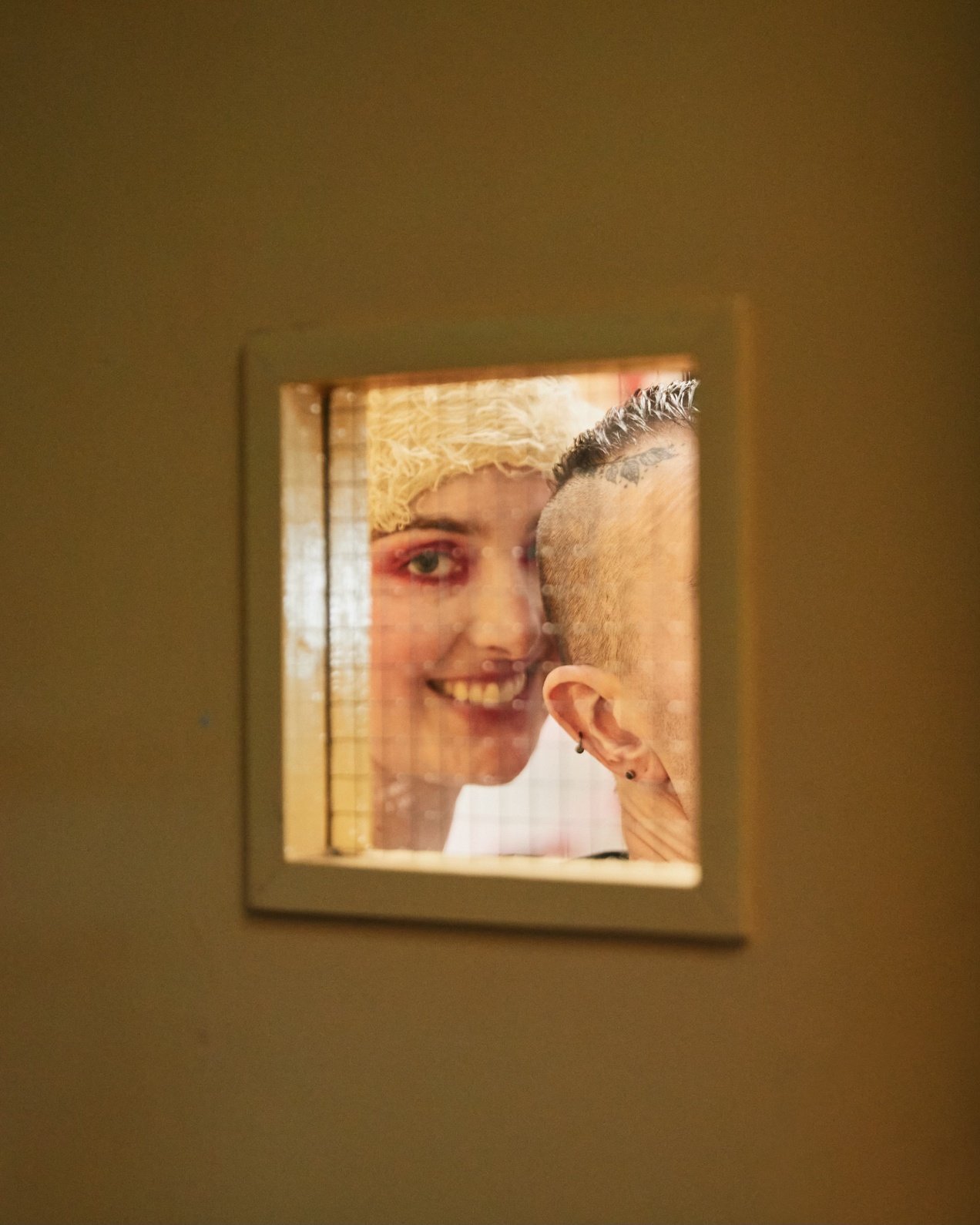
K.A Harper & E.M Parry. Photo: Henri T
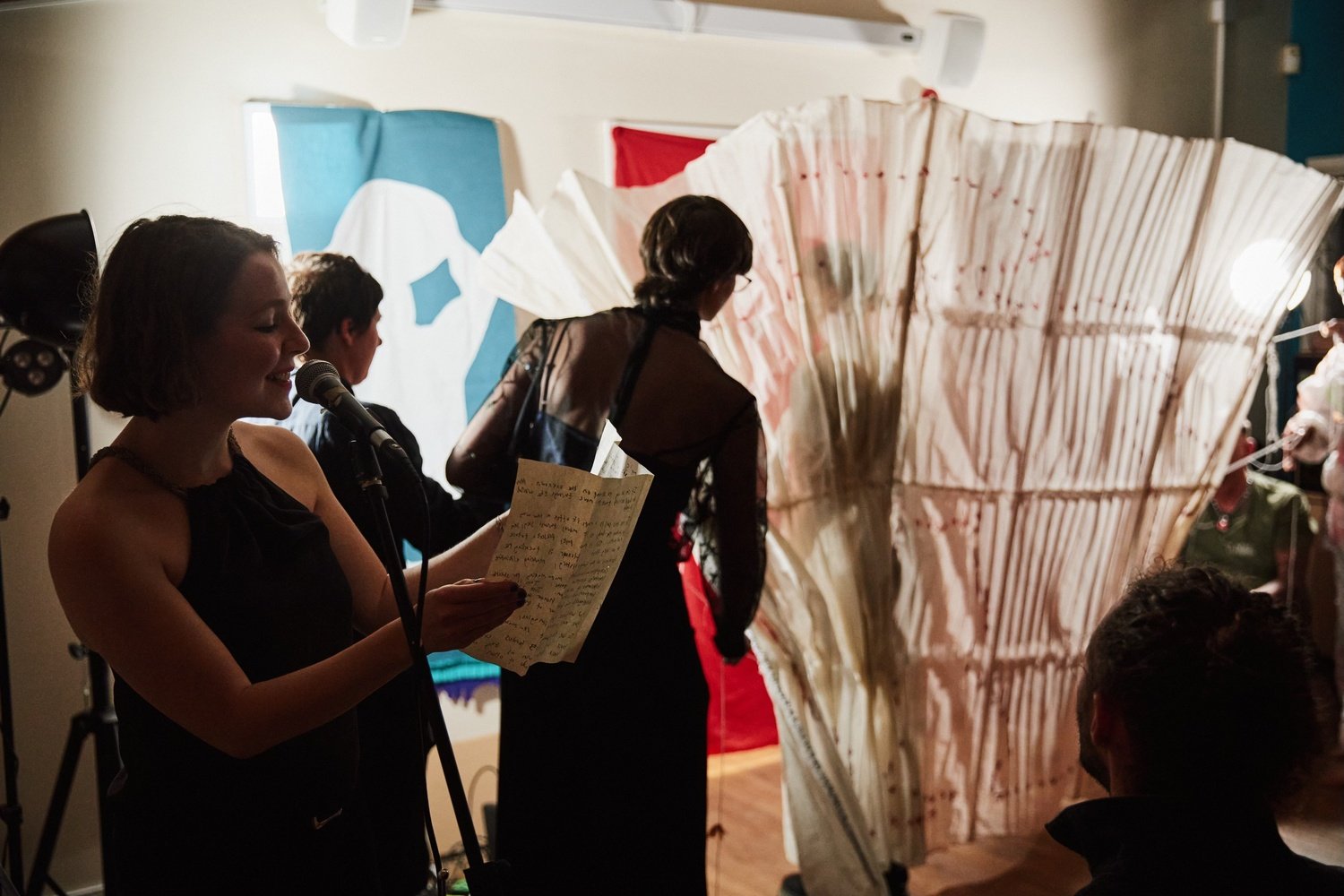
Honor Bathurst. Photo: Henri T
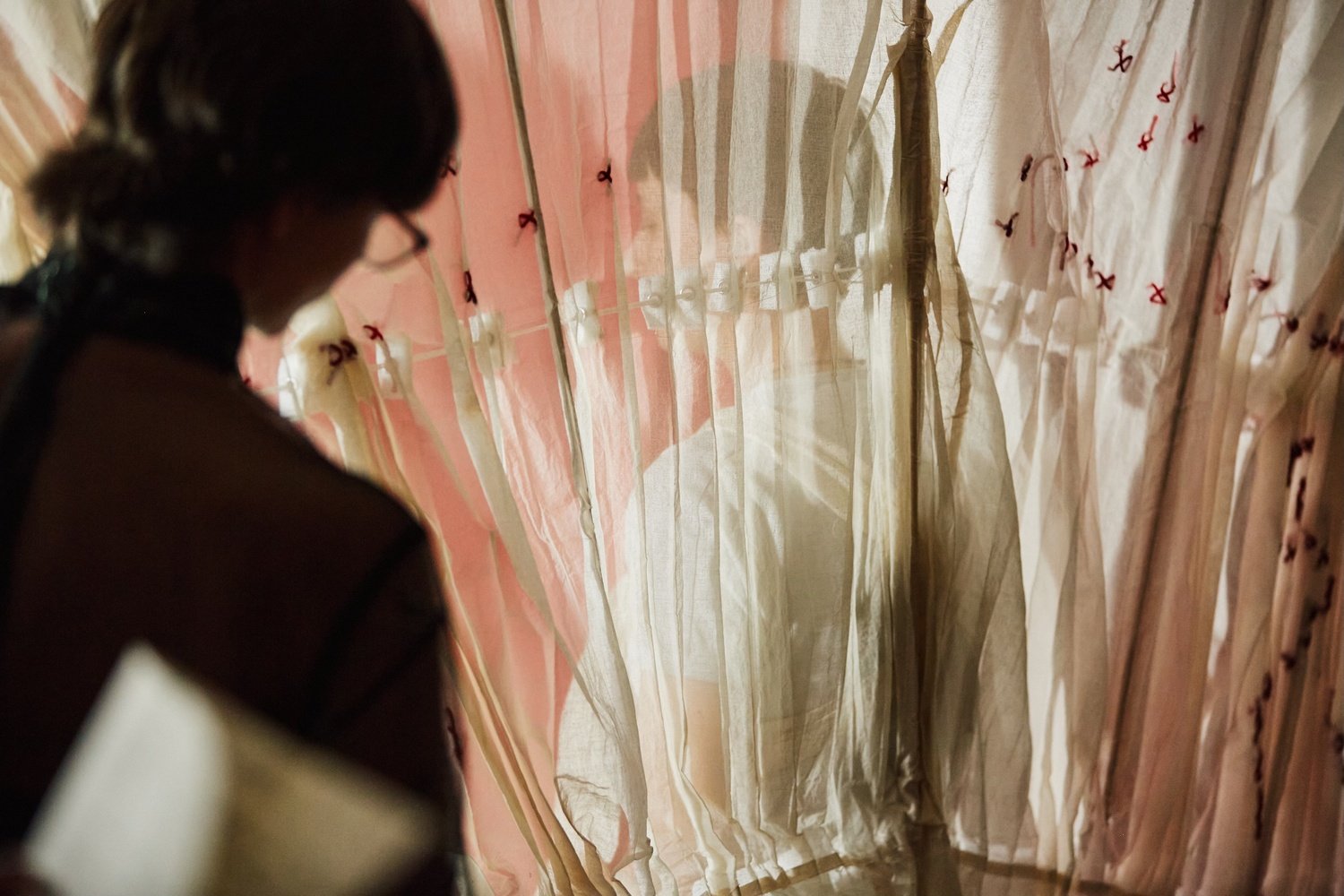
Honor Bathurst. Corsetina. Photo: Henri T
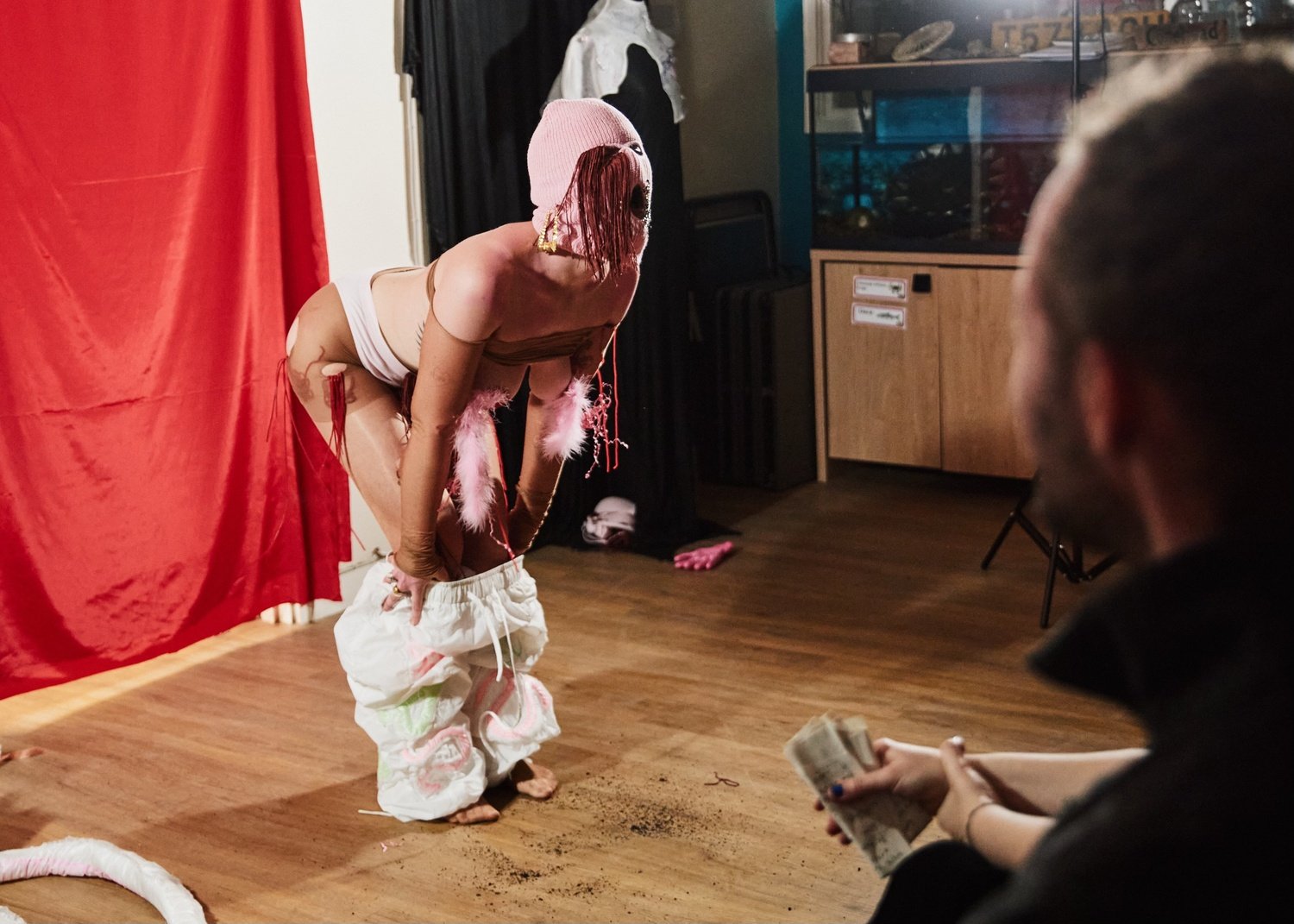
Fanny Bleach - Would you still love me if I was a worm? Photo: Henri T

Photo: Gabriela Salas

Ship of our queer ancestors. Photo: Gabriela Salas
The final exhibition pieces can be viewed on the Uncanny Gallery and are accompanied by descriptive texts created with and by DesCript, a company led by partially blind poet Joseph Rizzo Naudi.
Though the process Joseph interviewed each of our artists about their work and then passed those interviews to a poet, Annie Hayter, who worked ‘blind’ to create the descriptive texts. The first time Annie encountered the work was the day of the exhibition. During the evenings cabaret Annie read the supporting text to Honor Bathurst’s work Concertina, a costume piece that was manipulated and manoeuvred live on stage by members of the crew.
DesCrip’s unique process was important for all the artists as it offered us a deeper way of interpreting the uncanny and also provided rich, accessible poet descriptions for blind and visually impaired audiences.
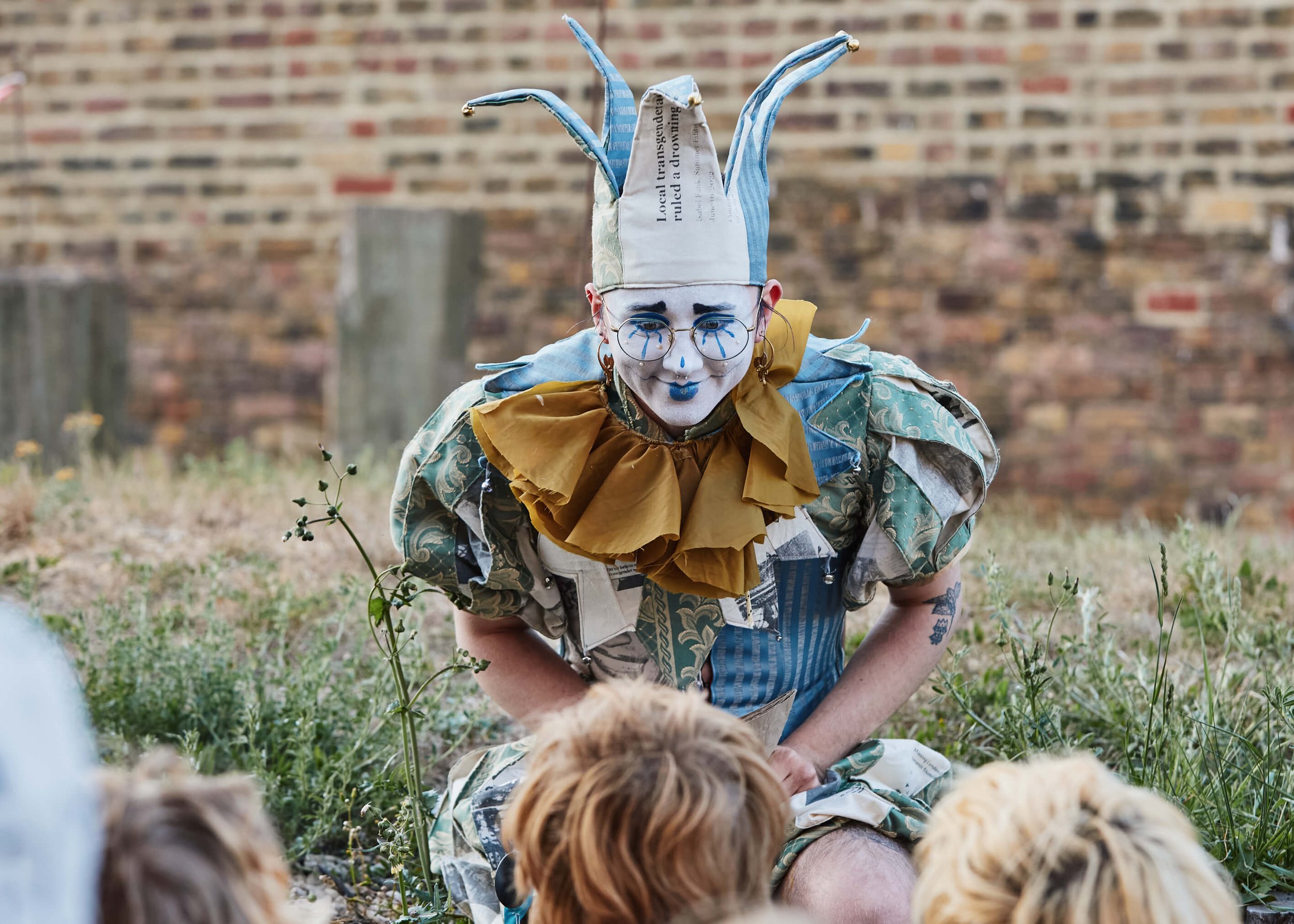
bug! performs his lament. Photo: Henri T
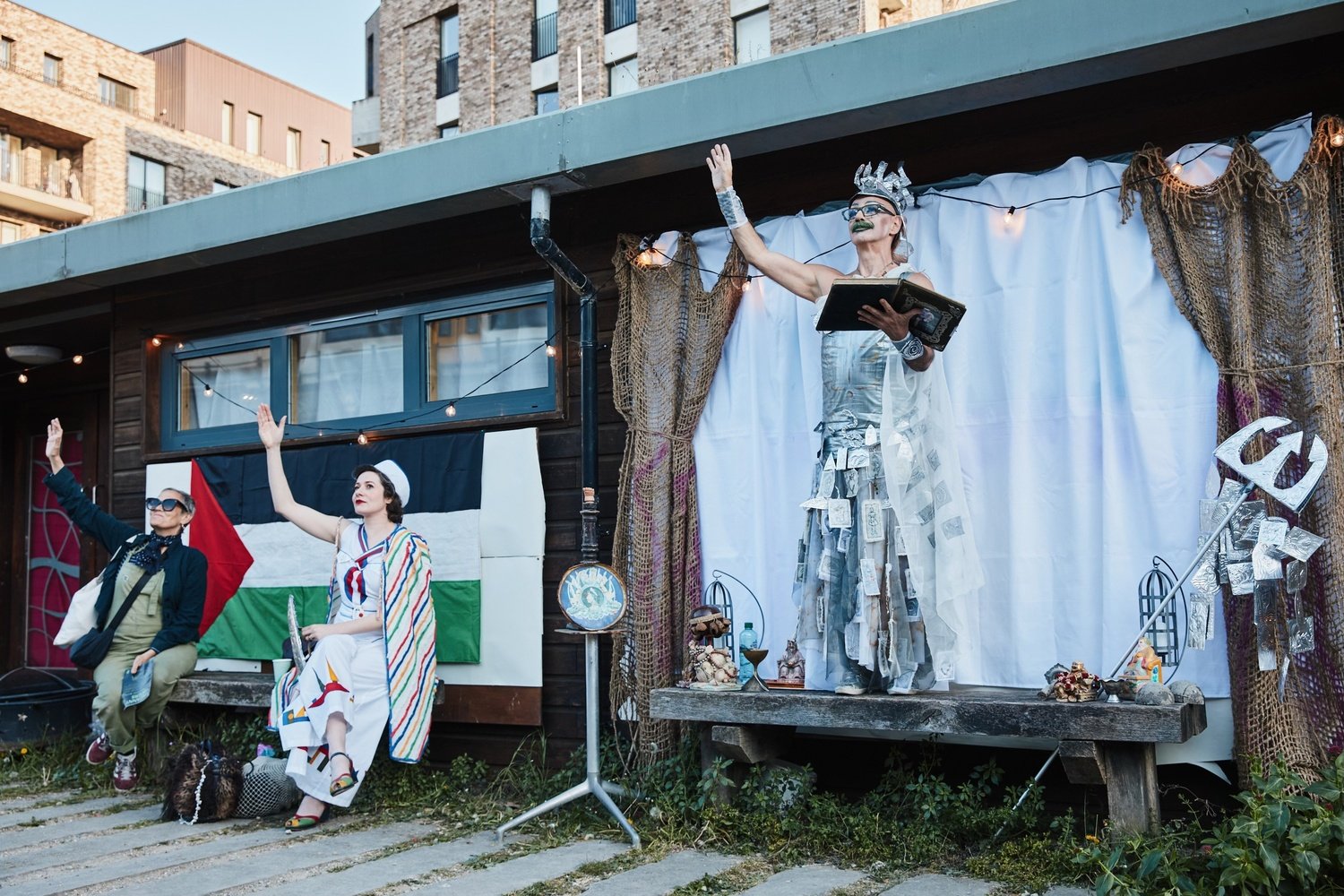
The project took place amid global crises: genocides and mass atrocities, that everyone was profoundly impacted by. Against this backdrop, Uncanny Waters became a space for solidarity and critique of national identity, and the colonial legacies embedded in the British heritage industry.
The project asked:
What does it mean to reject Empire today? Who is remembered and who erased? Who gets to define humanity, and who in the face of state violence are the real monsters?
“The Creek procession was hugely memorable and the collective feel of us queers on the bridge was filmic, a bearing witness moment that will stay with me…very special.
It was so good to be transported and connected with our ancestors, old, current, in the moment and future ones…”
— Audience member, Uncanny Waters, Deptford Creekside
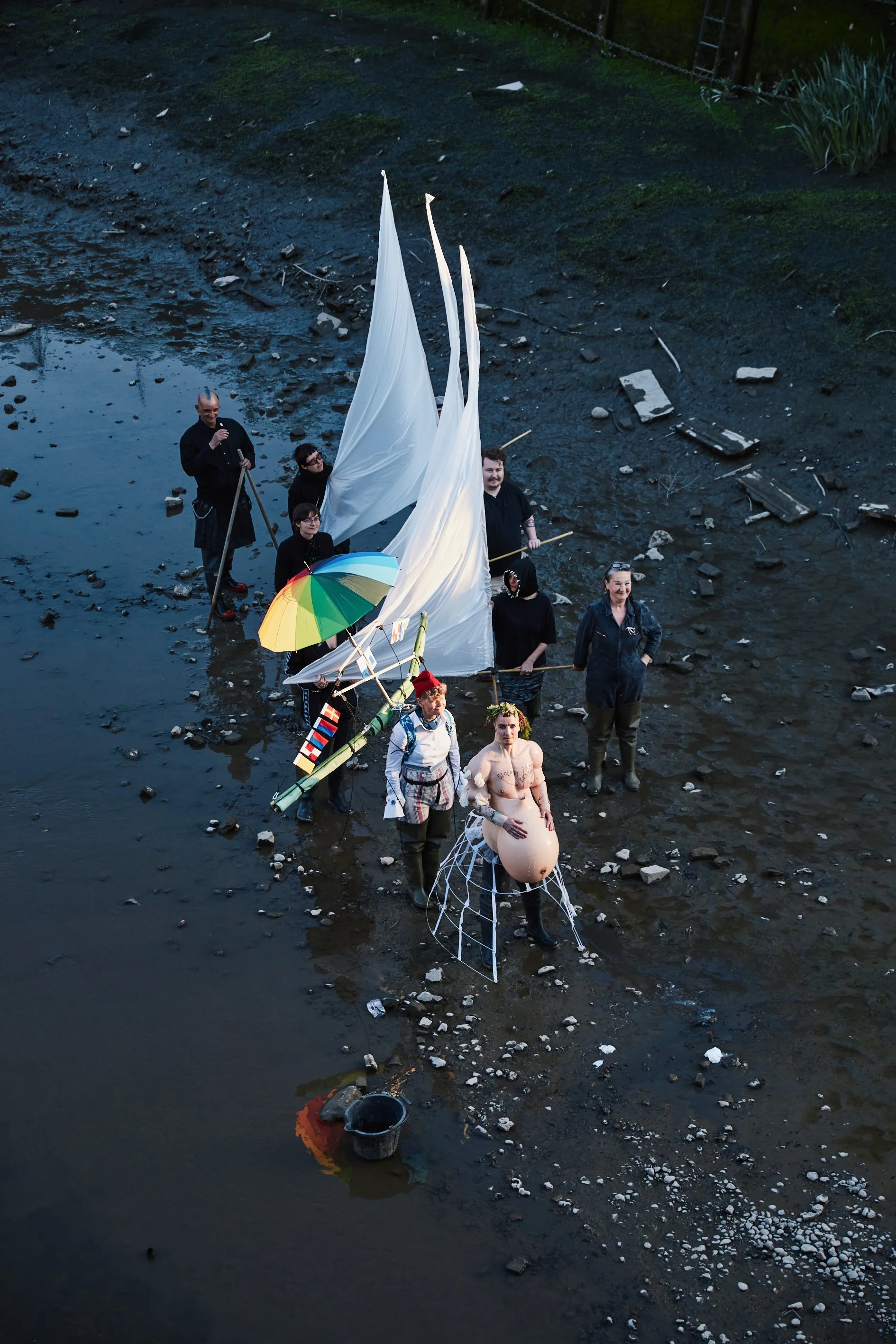
Our uncanny crew staged a live performance in the Creek itself, returning the work to the water and reconnecting it with the landscape.
At the Ha’penny Bridge, Medusa and her mystics asked the Necker:
“What’s in your knickers, Necker?” to which the responses: “Anger, Justice, Freedom” echoed through the Creek,
The Necker sang a mournful tune, while from the muddy banks a sacrificial figure emerged wading into the Creek in a white veil, revealing a swollen belly in baptismal waters.
While our elder Lu sacrificed the body to the Thames, elders and younger artists together evoked our queer ancestors in a communal act. The closing procession, a ship of intergenerational ancestors embodying our collective queer identity.
Photo: Henri T
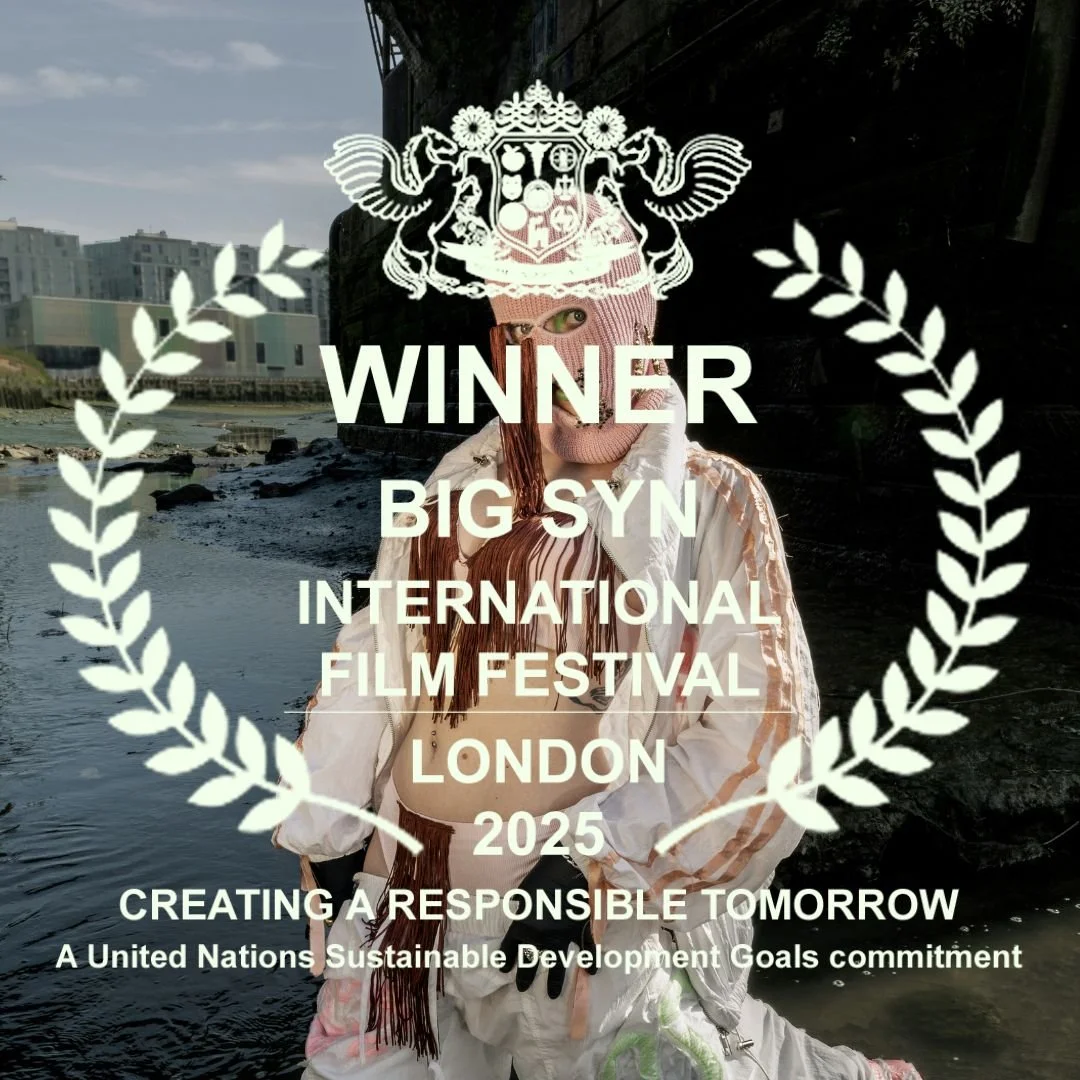
Winner of Best LGBTQIA+ filmmaker award, Big Syn International Film Festival, 2025.
Uncanny Waters the film, was co-created by Ray Malone and Steve Melia.
Credits:
Heads Bodies Legs artists: Lu Firth & Ray Malone
Uncanny Waters participants:
Arkem Mark Walton
Bug!
E.M Parry
Fanny Bleach
George Cox
Honor Bathurst
K.A Harper
Kate Coss
Medusa Has Been
Meg Jordan
Teabag
Description Texts: DesCrip: Annie Hayter (writer and performer) Joseph Rizzo Naudi (description facilitator and producer) and Autumn Sharkey (description facilitator and support worker)
Original Music by Kith. Vocals: K.A Harper , Violin: Fritha Jenkins
Photography: Henri T and Ray Malone
Costume Assistants: Nina Cava and Elisabeth Sur
Photography Assistants: Diliyana Tankova and Kathryn McGreary
Ancestral Boat Crew: Billy Taggart Brunton and Fiona Slater
Special thanks to Deptford Creekside Discovery Centre, Wimbledon College of Art, National Maritime Museum and Somerset House.
Supported by Arts Council England and Big South London.
“Being immersed in time travel, transported by costume, words and environments”
— Audience, Uncanny Waters
“Surreal beauty and authentic expression”
— Audience, Uncanny Waters
“It was so poetic and surprising. The boat appearing was like a dream… Clearly the time spent together had been used profoundly. A very thoughtful and provoking exploration of queer bodies, culture, resilience and community..”
— Audience, Uncanny Waters
“I loved that politics was there through and through time and performance content and visuals.”
— Audience, Uncanny Waters
“This whole event has become my number 1, of my top 10 experiences in my life”
Uncanny Waters Artists:
“My favourite moment was the performance in the creek. it came together so well with the setting sun and the choreography of the performers and the spectators watching and I felt like all of the costumes and artworks and ideas and experiences and people that I've been exposed to throughout my involvement in the preparation for the exhibition were culminating somehow in that performance in a way which also felt quite mysterious and I loved that.”
“…part of my personal development through the project was really about gathering so much more of a sense of queer lineage, of the queer history in the streets that I walk today in London. Towards the end of the project, I started to feel different in the city, a sense of being held and surrounded, I would have the stories that everyone was sharing in mind, for example of certain nights out in the 80s, of bars, protests, partners, ex partners, etc and I have felt sense of belonging, of trust, and of hope.”
“It has truly been a privilege and a joy to work with such a generous and interesting group of people. Definitely a highlight of the whole experience.”
“I don't always feel very confident talking about political things, I know how I feel but find it hard to articulate. But you both created a space that felt so easy and comfortable that having these discussions only made me feel interested and keen to learn more, never judged or criticised and I didn't feel intimidated.”
“The themes of queer heritage and migration have resonated strongly with me chiming with my experience of biological and chosen family. The restless grief & hope of people forever moving on, the dichotomy of belonging and not belonging.
The symbolism of water – bringer of life and death, always refracting and reflecting, the shifting patterns of tidal flows and cycles of life. The fluidity of the body, the flotsam and jetson of our recycled material reality drifting on currents and washing up on unknown shores.”
“It has truly been a life affirming, life changing moment for me!”


